Persistent knee pain raises a simple but pressing question: is this normal wear and tear, or something that requires specialist attention? For many adults between 45 and 65, the uncertainty around joint degeneration—what it means, how it’s diagnosed, and whether surgery is inevitable—can feel more daunting than the discomfort itself. The good news is that diagnosing knee osteoarthritis follows a clear, stepwise process, and treatment options exist on a spectrum from the most conservative approaches to surgical intervention, with each step guided by objective findings rather than assumptions.
Understanding how a specialist evaluates your knee and decides on the right course of action allows you to approach a consultation prepared, informed, and in control. This article walks through the diagnostic pathway a knee surgeon follows, the hierarchy of treatments available, and the questions you can ask to ensure you receive care that matches your situation—not a one-size-fits-all approach.
How a knee surgeon diagnoses and treats joint degeneration: an overview
Direct answer: A knee surgeon diagnoses joint degeneration through a structured process: patient history and clinical examination come first, followed by imaging (usually an X-ray, with MRI reserved for specific situations), and staging the severity of osteoarthritis. Treatment begins with conservative measures—lifestyle modification, physical therapy, pain relief, and injections—and progresses to surgical options only when these measures fail and objective criteria are met.
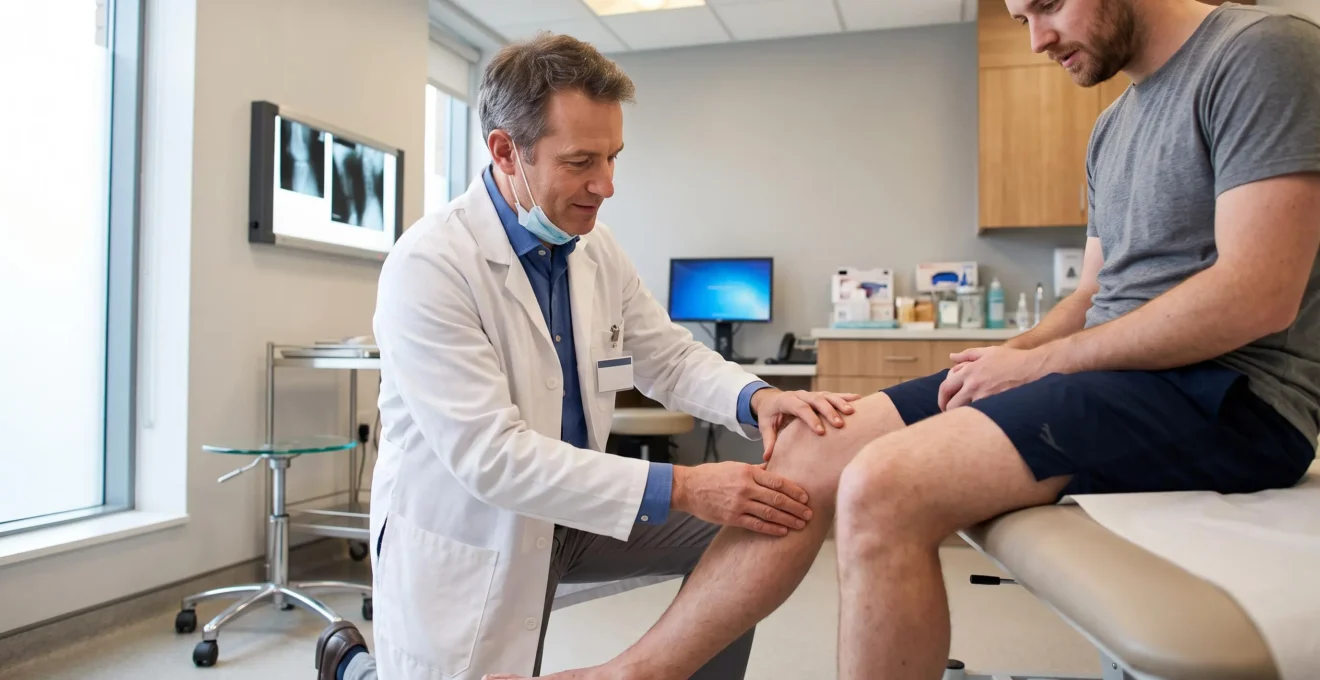
The diagnostic pathway starts with listening. A knee surgeon will ask detailed questions about your symptoms: when the pain began, what activities worsen it, whether stiffness improves with movement, and how the discomfort affects daily life. This conversation, known as the patient history or anamnesis, helps narrow the likely causes before any physical examination or imaging takes place.
Next comes the clinical examination—palpation of the joint, tests of range of motion, assessment of swelling, and specific maneuvers to check the stability of ligaments and the condition of the meniscus. These hands-on findings guide the decision about which imaging studies, if any, are necessary.
Treatment follows a clear hierarchy. Conservative approaches form the foundation: exercise programs tailored to strengthen the muscles around the knee, adjustments to activity levels, weight management where relevant, pain-relief medications, and injections such as corticosteroids or hyaluronic acid. Surgery becomes an option only when these measures have been tried, symptoms persist or worsen, imaging confirms significant degeneration, and the impact on quality of life justifies intervention.
Consulting early expands your options. The sooner degeneration is identified, the more opportunities exist to slow progression and preserve function without invasive procedures.
What is knee joint degeneration and why does it develop?
Knee joint degeneration, medically termed knee osteoarthritis or gonarthrosis, occurs when the cartilage cushioning the ends of the bones in the knee joint gradually wears away. Cartilage acts as a smooth, shock-absorbing surface that allows the joint to move freely; as it thins or breaks down, bone begins to rub against bone, causing pain, stiffness, swelling, and reduced mobility.
According to the American College of Rheumatology, osteoarthritis affects an estimated 33 million people in the United States, with updated guidance emphasizing exercise, self-management, and shared decision-making as core treatment principles.
Several factors increase the likelihood of developing knee osteoarthritis. Age is a primary contributor, as cartilage naturally loses its resilience over time. Previous knee injuries—torn ligaments, meniscus damage, fractures—raise the risk significantly. Excess body weight places additional stress on the joint, accelerating wear. Genetics, occupation (jobs requiring prolonged kneeling or heavy lifting), and certain sports can also play a role.
Symptoms that should prompt a consultation include persistent pain during or after movement, stiffness upon waking or after sitting, a sensation of the knee “giving way,” swelling that does not resolve, and a grinding or clicking feeling during motion. These signs do not automatically mean surgery is necessary, but they do indicate that an evaluation can clarify what is happening inside the joint and what can be done about it.
Reassurance: Knee osteoarthritis is extremely common and well understood. Standardized diagnostic and treatment protocols mean that you are not facing the unknown—you are entering a pathway that thousands of specialists follow daily, with outcomes that depend on the stage of degeneration and the treatments you pursue.
How does a knee surgeon confirm the diagnosis?
Confirmation of knee osteoarthritis begins with the consultation itself. The surgeon listens to your description of symptoms, asks about their duration and progression, and inquires about prior injuries, family history, and activities that trigger discomfort. This conversation provides context that imaging alone cannot supply.
The physical examination follows. The surgeon palpates the joint to detect swelling, warmth, or tenderness, tests the range of motion by bending and straightening the knee, and performs specific tests to assess ligament integrity and meniscus function. These findings help determine whether the pain stems from cartilage degeneration, soft tissue damage, or another issue entirely.
Imaging comes next, but in a specific order. According to the American College of Radiology, an X-ray is usually the appropriate first imaging test for chronic knee pain. X-rays reveal bone structure, joint space narrowing (a hallmark of cartilage loss), bone spurs, and alignment issues. They are quick, widely available, and provide the essential information needed to stage osteoarthritis.
MRI is reserved for situations where X-rays are normal but symptoms persist, when soft tissue structures (ligaments, meniscus, cartilage) need closer evaluation, or when the clinical picture does not match the radiographic findings. MRI without contrast is typically sufficient and offers detailed views of tissues that X-rays cannot capture.
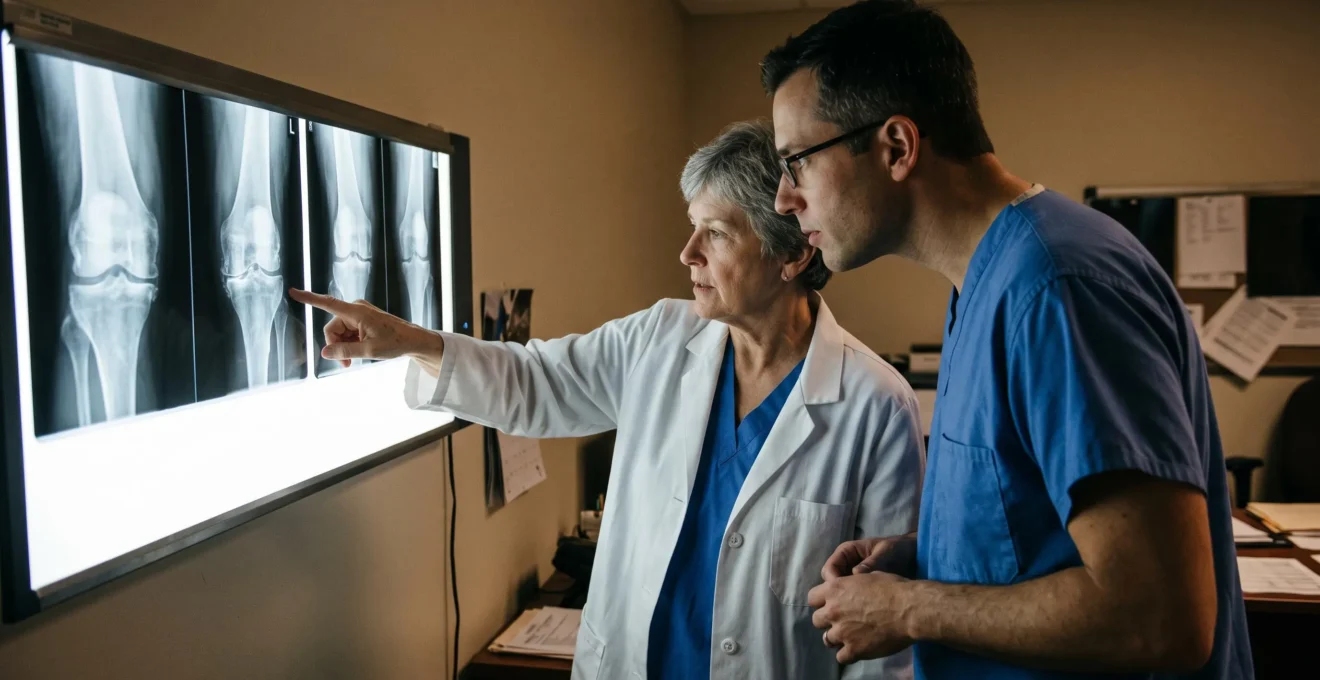
Osteoarthritis is staged based on imaging findings and clinical symptoms, typically on a scale from mild to severe. Mild osteoarthritis shows minimal joint space narrowing and small bone spurs, with symptoms that come and go. Moderate osteoarthritis involves noticeable narrowing, larger spurs, and more consistent pain. Severe osteoarthritis presents with significant narrowing, substantial bone-on-bone contact, deformity, and persistent, debilitating symptoms. The stage directly influences which treatments are appropriate.
Before your consultation, you can prepare by noting when your pain started, what makes it better or worse, any previous knee injuries, medications you have tried, and how the pain affects your daily activities. This information helps the surgeon build an accurate picture of your condition and tailor recommendations accordingly.
Which treatments exist before surgery becomes an option?
Conservative treatment forms the foundation of knee osteoarthritis management. The AAOS clinical practice guideline states that certain knee procedures are considered only after nonsurgical treatments, such as physical therapy or injections, have failed, with physicians relying on individual clinical judgment.
Exercise and physical therapy are central to early-stage management. Strengthening the quadriceps, hamstrings, and hip muscles stabilizes the knee, reduces stress on the joint, and can significantly decrease pain. A physical therapist designs a program tailored to your current mobility and gradually builds strength and flexibility without aggravating symptoms.
Lifestyle adjustments also matter. If excess weight contributes to joint stress, even modest weight loss can reduce pain and slow progression. Activity modification—choosing low-impact exercises like swimming or cycling over high-impact running—preserves joint health while maintaining fitness.
Pain management includes over-the-counter medications such as acetaminophen or nonsteroidal anti-inflammatory drugs (NSAIDs), which reduce discomfort and inflammation. Topical NSAIDs offer localized relief with fewer systemic side effects. Injections provide another tier of conservative care: corticosteroid injections reduce inflammation and can offer weeks to months of relief, while hyaluronic acid injections aim to improve joint lubrication, though results vary among individuals.
Conservative treatment checklist
- Physical therapy focusing on muscle strengthening around the knee
- Activity modification to reduce joint stress without eliminating movement
- Weight management where relevant to decrease load on the joint
- Oral or topical pain relief medications as needed
- Injections (corticosteroids or hyaluronic acid) when pain persists despite other measures
Perseverance with conservative treatment often pays off. Many patients experience meaningful improvement without surgery, particularly when treatment begins early and is followed consistently. The transition to surgical consideration occurs when conservative measures have been tried over an appropriate period (typically several months), symptoms persist or worsen despite these efforts, imaging confirms significant degeneration, and the functional impact on daily life justifies the risks and recovery associated with surgery.
For readers seeking additional context on post-injection activity, the question of returning to exercise after knee injections is addressed in resources such as guidance on sport after knee injection, though individual recommendations should always come from your treating physician.
When is knee surgery the right choice?
Surgery becomes appropriate when specific, objective criteria converge: conservative treatments have been pursued diligently without sufficient relief, imaging confirms moderate to severe osteoarthritis, and the pain or functional limitation significantly impairs your quality of life—not just occasionally, but consistently.
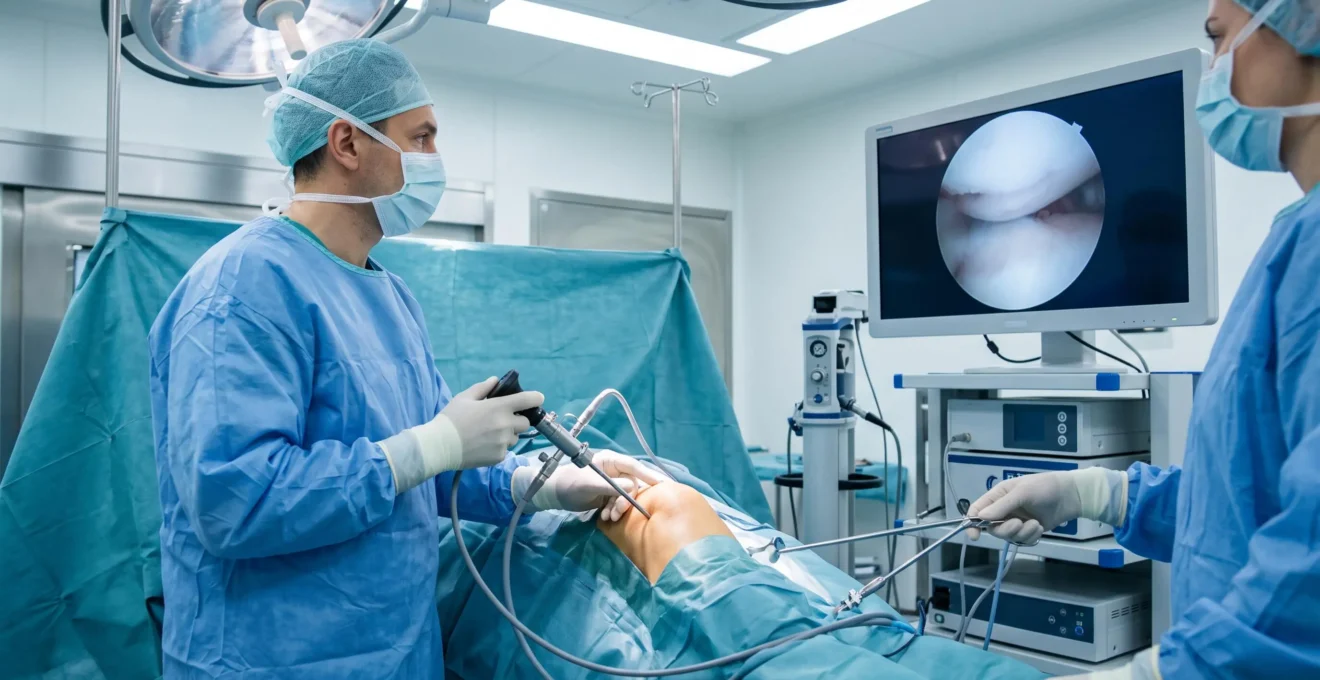
Three main surgical options exist, each suited to different anatomical and clinical situations. Arthroscopy involves inserting a small camera and instruments into the knee through tiny incisions to address specific problems such as loose cartilage fragments or meniscus tears. It is minimally invasive but is not a cure for osteoarthritis; rather, it addresses mechanical symptoms in carefully selected cases.
Osteotomy is a procedure that realigns the leg bones to shift weight away from the damaged part of the knee. It is typically considered for younger, active patients with osteoarthritis confined to one compartment of the knee, preserving the natural joint while redistributing load. Recovery takes several months, but the procedure can delay the need for knee replacement by years.
Total knee replacement, or arthroplasty, involves removing the damaged cartilage and bone and replacing the joint surfaces with metal and plastic components. This option suits patients with advanced, widespread osteoarthritis who have exhausted conservative measures. Modern techniques, including robot-assisted arthroplasty, aim to improve precision and outcomes, though the fundamental goal remains the same: restore function and relieve pain.
Choosing an experienced surgeon matters. Concrete questions to ask during a first consultation include: How many knee procedures of this type do you perform each year? What are the most common complications and how often do they occur? What alternatives have we not yet tried? What does the recovery timeline look like realistically? What results should I expect at three months, six months, and one year?
Volume of practice serves as one indicator of experience. For instance, practitioners such as Professor Cavaignac communicate performing more than 1,000 knee operations annually, with 16 years of experience and a rating of 4.8 out of 5 based on 259 Google reviews, and offer robot-assisted arthroplasty among their services. These figures, as communicated by the practice, can help inform your assessment, but they should be considered alongside other factors: the surgeon’s willingness to explain options clearly, their approach to shared decision-making, and your comfort level with their recommendations.
Important: No surgeon can guarantee specific outcomes, and no single metric—volume, reviews, or technology—replaces the need for a thorough clinical evaluation and a personalized treatment plan. The right choice depends on your individual anatomy, stage of degeneration, overall health, and goals.
Key takeaways and next steps for healthier knees
Knee joint degeneration follows a diagnostic pathway that begins with your story and the surgeon’s hands, not with advanced imaging. X-rays typically come first, with MRI reserved for situations where clinical findings and radiographs do not align or soft tissue detail is needed. Treatment starts conservatively—exercise, activity modification, weight management, pain relief, and injections—and progresses to surgery only when objective criteria justify it.
Surgery is not inevitable. Many patients achieve meaningful improvement through conservative measures alone, particularly when treatment begins early and is followed consistently. When surgery does become appropriate, the specific procedure—arthroscopy, osteotomy, or total knee replacement—depends on the location and severity of degeneration, your age, activity level, and overall health.
Red flags that justify prompt consultation
- Persistent knee pain lasting more than a few weeks despite rest and over-the-counter pain relief
- Significant swelling that does not resolve within a few days
- Knee instability or episodes of the joint “giving way”
- Pain that wakes you at night or limits daily activities such as walking or climbing stairs
- Difficulty bearing weight on the affected leg
If you experience unexplained knee pain that persists despite initial imaging, a private MRI for unexplained joint pain may provide the additional detail needed to guide treatment, particularly when X-rays appear normal but symptoms continue.
Your next steps depend on where you are in this process. If you have not yet consulted a specialist, note your symptoms, their triggers, and their impact on daily life, then seek an evaluation. If you have already seen a surgeon and received conservative treatment recommendations, follow them consistently for the recommended duration before concluding they are ineffective. If you are considering surgery, ask the questions outlined above, seek a second opinion if uncertainties remain, and ensure you understand the realistic recovery timeline and expected outcomes.
Can knee degeneration be slowed? Yes, through weight management, appropriate exercise, and early intervention when symptoms first appear. Is surgery inevitable? No—many people manage osteoarthritis successfully without ever requiring an operation, though some will benefit significantly from surgical intervention when the time is right.
How do I know if my knee pain is osteoarthritis or something else?
At what stage of arthritis does knee replacement become necessary?
Is an MRI always needed to diagnose knee osteoarthritis?
How long should I try conservative treatment before considering knee surgery?
Medical disclaimer: This article is for informational purposes only and does not constitute medical advice. The necessity of any diagnostic test or treatment, including surgery, can only be determined through a clinical consultation and appropriate imaging. Always consult a qualified healthcare professional before making decisions about your health.