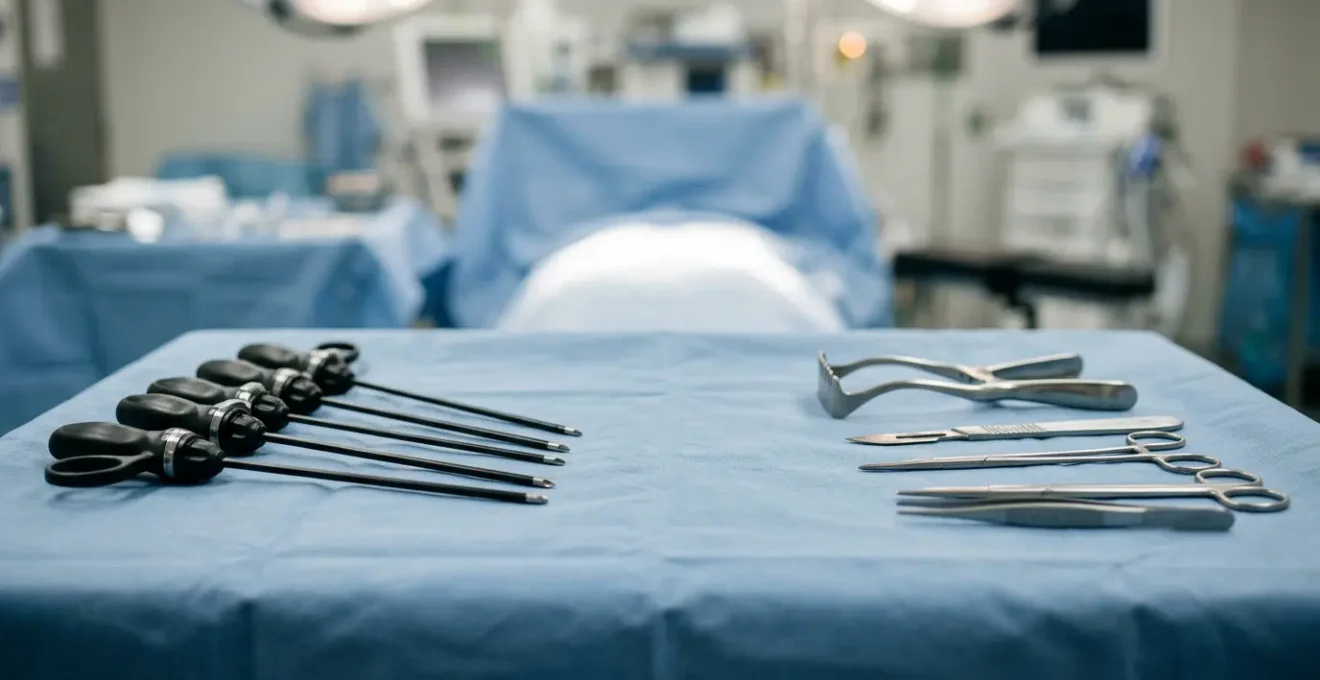
The most significant factor in surgical success isn’t the size of the incision, but the surgeon’s judgment and ability to adapt to the unique anatomy and challenges presented by each patient.
- Minimally invasive surgery offers faster recovery, but it is not risk-free and carries specific complications like gas embolism and internal adhesions.
- A surgeon’s decision to convert from a laparoscopic to an open procedure is a proactive safety measure, not a failure, often prompted by internal scar tissue or unclear anatomy.
Recommendation: Discuss the specific criteria for a potential “conversion to open” with your surgeon to fully understand the risks and safety protocols for your individual case.
When faced with the choice between laparoscopic and open surgery, the decision can seem simple. The promise of smaller incisions, less pain, and a quicker return to daily life makes minimally invasive surgery the overwhelmingly popular choice. Patients often arrive for a consultation with the firm belief that “keyhole” is inherently superior, a modern triumph over the large, traditional incisions of the past. This focus on the cosmetic outcome and recovery speed is understandable, but it often overlooks a more critical, nuanced conversation.
From a surgeon’s perspective, the choice is rarely about “new” versus “old” technology. It is a complex risk-benefit analysis, a process of “surgical judgment” tailored to the individual. The most important question isn’t “Which method leaves a smaller scar?” but “Which method provides the safest path to the best possible long-term outcome?” This involves considering the patient’s unique anatomy, previous surgical history, and the specific challenges of the procedure at hand.
The prevailing belief that less invasive always means less risk is a dangerous oversimplification. While laparoscopic surgery has revolutionized treatment for many conditions, it introduces its own set of specific risks and limitations that are invisible from the outside. The true measure of a successful operation is not just a neat scar but the preservation of function and the avoidance of complications, both immediate and long-term. A larger incision may, in certain, well-defined circumstances, be the safest route to achieving that goal.
This article will guide you through that surgical thought process. We will explore the reasons why a surgeon might choose an open approach from the start or convert to one mid-operation. We will examine the real differences in recovery, delve into the specific, often undiscussed risks of laparoscopic procedures, and highlight the crucial role of surgical training and experience. The goal is to empower you to have a more informed discussion with your doctor, moving beyond the size of the scar to what truly matters: your safety and long-term well-being.
To navigate these complex considerations, this article is structured to provide a clear, step-by-step understanding of the surgical decision-making process. The following sections will break down each critical aspect of the laparoscopic versus open surgery debate.
Summary: Laparoscopic vs Open Surgery: Is Minimal Invasion Always Better?
- Why Some Emergencies Require Conversion to Open Surgery Mid-Operation?
- When Is Open Gallbladder Surgery Safer Than Laparoscopic?
- Laparoscopic Recovery (1 week) vs Open Recovery (6 weeks): What’s the Real Difference?
- The Gas Embolism Complication That Can Cause Cardiac Arrest During Routine Surgery
- Why Some Laparoscopic Patients Develop Scar Tissue Adhesions?
- How to Shower with Hibiscrub Before Surgery to Reduce Risk?
- Awake Craniotomy vs General Anaesthetic: Which Is Safer for Tumour Removal?
- The Rigorous Training Path of a UK Consultant Neurosurgeon
Why Some Emergencies Require Conversion to Open Surgery Mid-Operation?
In the operating room, a surgeon’s primary responsibility is patient safety. The decision to convert a laparoscopic procedure to an open one is the ultimate expression of this principle. It is not a failure or a complication, but a proactive and planned judgment call made to prevent potential harm. This scenario typically arises when the view through the laparoscope is obscured or the anatomy is unclear, making it unsafe to proceed with minimal access tools. Factors like unexpected bleeding, dense scar tissue from previous operations, or unusual anatomical structures can make dissection with long, rigid instruments risky.
Attempting to force a laparoscopic approach in an unsafe environment can lead to inadvertent injury to blood vessels, bile ducts, or the bowel. By converting to an open procedure, the surgeon gains direct visual and tactile access to the operative field. This allows for better control, safer dissection, and a more secure repair. The threshold for conversion is a key element of surgical training and experience. An experienced surgeon knows precisely when the theoretical benefits of a smaller incision are outweighed by the real-time risks of proceeding laparoscopically.
This is not a rare event. While rates vary depending on the complexity of the procedure and patient factors, conversion is a standard part of the surgical consent process. For example, research involving 1,253 patients undergoing laparoscopic colorectal surgery found a conversion rate of 10.0%. This statistic underscores that conversion is an integral and necessary tool in the surgeon’s armamentarium, used to ensure the best and safest outcome when faced with unforeseen challenges.
When Is Open Gallbladder Surgery Safer Than Laparoscopic?
The gallbladder is one of the most common organs removed via laparoscopy, but certain conditions make the open approach significantly safer. The primary concern is the presence of a “hostile abdomen,” a term surgeons use to describe an environment where internal scar tissue (adhesions) or severe inflammation has fused tissues together, obscuring the normal anatomical planes. This is particularly common in patients who have had previous surgery in the upper abdomen.
In a hostile abdomen, the critical structures—specifically the cystic duct and cystic artery—can be difficult to identify. The risk of misidentifying and accidentally injuring the main common bile duct is drastically increased. This is a severe, life-altering complication. In such cases, the tactile feedback and wider field of view offered by open surgery are indispensable for safely dissecting the gallbladder away from surrounding structures. Other factors that increase the likelihood of choosing an open approach include severe, acute inflammation (cholecystitis) where tissues are swollen and fragile, or the suspicion of gallbladder cancer, which requires a wider removal of tissue.
Case Study: The Impact of Previous Surgery
The risk posed by a hostile abdomen is not theoretical. In a study analyzing outcomes for laparoscopic gallbladder removal, patients who had undergone previous upper abdominal surgery had a conversion rate to open surgery of 18.8%. This was dramatically higher than the 4.8% conversion rate for those with only previous lower abdominal surgery. This data clearly demonstrates how scar tissue from prior operations in the immediate vicinity creates a high-risk environment where proceeding laparoscopically is often no longer the safest option.
Patient demographics can also play a role in risk assessment. A study analyzing conversion risk factors showed a rate of 6.8% for males versus 3.2% for females, which may be related to differences in fat distribution and tissue inflammation. Ultimately, the decision rests on the surgeon’s pre-operative assessment and their judgment that an open procedure will best mitigate the risk of a major ductal injury.
Laparoscopic Recovery (1 week) vs Open Recovery (6 weeks): What’s the Real Difference?
The most celebrated advantage of laparoscopic surgery is undeniably the recovery period. By avoiding the large incision that cuts through layers of abdominal muscle, patients experience significantly less post-operative pain, require less pain medication, and can return to their normal lives much faster. The difference is stark: clinical guidelines indicate a return to normal activities in 1-2 weeks for laparoscopic procedures versus 4-6 weeks for open surgery. Hospital stays are also shorter, often reduced from several days to just one or even same-day discharge.
However, the “real difference” extends beyond the timeline. With an open procedure, the primary focus of recovery is the healing of the large external incision and the underlying muscle wall. This involves significant restrictions on lifting and physical exertion for several weeks to prevent a hernia. In contrast, laparoscopic recovery is more about the internal healing. While the small external wounds heal quickly, the internal work—the removal of an organ, the sealing of vessels—is identical to an open procedure. The body still needs time to recover internally, even if the patient feels deceptively well.

This is a crucial point of patient education. Feeling good after a week does not mean the internal healing is complete. Overexertion can still cause internal strain or complications. The reduced pain from laparoscopy is a major benefit, but it shouldn’t mask the fact that a significant physiological event has occurred. The real difference is not just speed, but the *type* of healing the body is undergoing: primarily external and muscular for open surgery, and primarily internal and systemic for laparoscopic surgery.
The Gas Embolism Complication That Can Cause Cardiac Arrest During Routine Surgery
Every surgical procedure carries risks, and laparoscopic surgery is no exception. One of the most serious, though very rare, complications specific to this technique is a carbon dioxide (CO2) gas embolism. To create the space needed to work, the abdomen is inflated (a process called insufflation) with CO2 gas. An embolism occurs when this gas inadvertently enters a blood vessel or organ and travels through the bloodstream to the heart or lungs. This can block blood flow, leading to a sudden drop in blood pressure, an irregular heartbeat, and in the most severe cases, cardiac arrest.
The risk of this happening is extremely low. A comprehensive meta-analysis documented an incidence of just 0.001%, or approximately 7 events in nearly half a million procedures. It most often occurs during the initial insertion of the main surgical port (the trocar) if it accidentally punctures a major vessel. Anesthesiologists are highly trained to monitor for the subtle signs of a gas embolism, such as a drop in exhaled CO2 and changes in vital signs, allowing for immediate intervention.
Despite its rarity, the potential severity of a CO2 embolism is why surgeons and anesthesiologists treat insufflation with such respect. When it does occur and becomes symptomatic, the consequences can be devastating. Data shows that the mortality rate for symptomatic CO2 embolism can be as high as 28%. This stark reality is a powerful counterpoint to the idea that minimal access surgery is “minor” surgery. It is a complex procedure with unique, high-stakes risks that require constant vigilance from the entire surgical team. While the benefit of laparoscopy is immense, it comes with a responsibility to manage these specific, low-probability but high-impact events.
Why Some Laparoscopic Patients Develop Scar Tissue Adhesions?
While laparoscopic surgery is credited with reducing external scarring, it does not eliminate the body’s internal healing response. Any time tissues are handled, cut, or cauterized, the body initiates an inflammatory repair process. This process can lead to the formation of adhesions—bands of fibrous scar tissue that can cause organs and tissues, which are normally separate, to stick together. This is one of the most significant long-term hidden downsides of any abdominal surgery, including laparoscopic.
Although it was initially hoped that the gentler handling of tissues in laparoscopy would reduce adhesion formation compared to open surgery, the reality is more complex. The use of CO2 gas can dry out tissues, and the heat from cauterizing instruments can also trigger an inflammatory response that leads to adhesions. These internal scars can be asymptomatic, but they can also cause chronic pain, infertility (by distorting the fallopian tubes and ovaries), and most dangerously, small bowel obstruction—a surgical emergency where the intestine becomes kinked or trapped by an adhesion band.
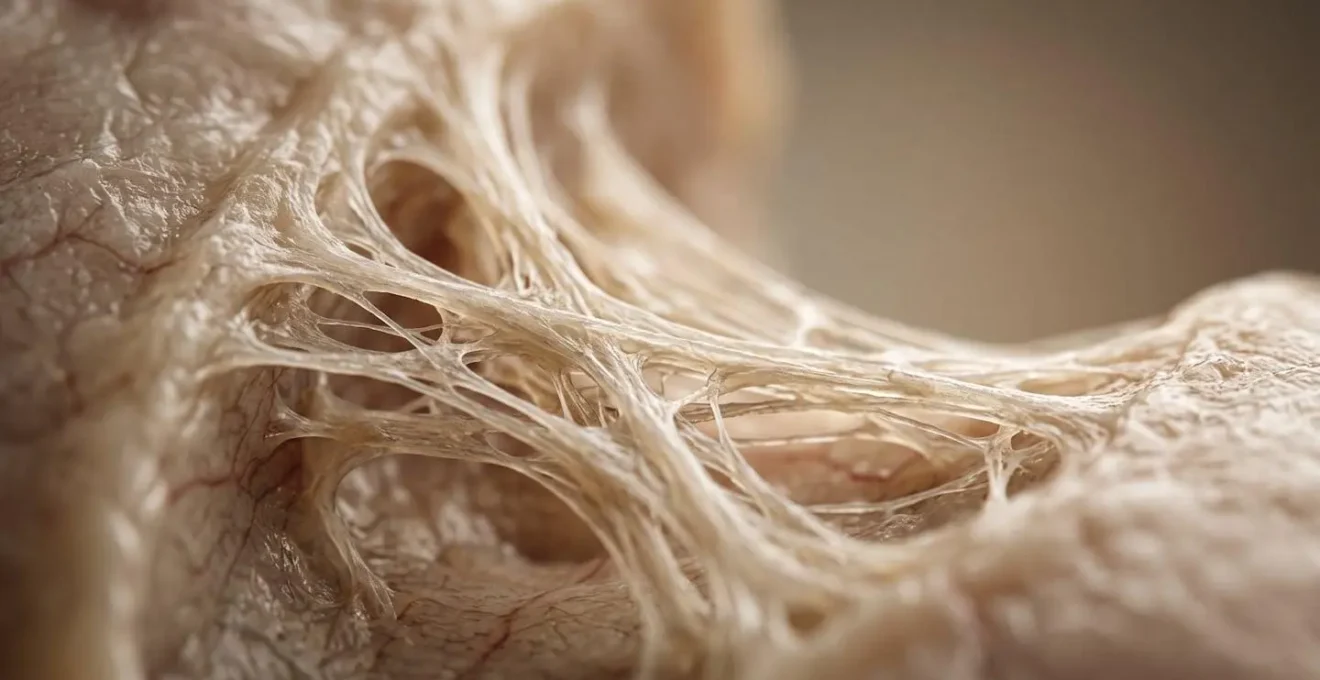
Adhesion formation is incredibly common. A systematic review of 25 studies found an overall adhesion formation rate of 54% following abdominal surgery. This figure rose to 66% after gastrointestinal surgery and 51% after gynecological surgery. Furthermore, once adhesions form, they are notoriously difficult to treat, as the very surgery to remove them (adhesiolysis) can, and often does, lead to the formation of new adhesions. This creates a challenging cycle for both patients and surgeons, where the “solution” can perpetuate the problem.
How to Shower with Hibiscrub Before Surgery to Reduce Risk?
Regardless of whether a procedure is open or laparoscopic, one of the most significant risks is a Surgical Site Infection (SSI). These infections occur when bacteria, primarily from the patient’s own skin, enter the incision. While surgeons take extreme care to maintain a sterile field in the operating room, patient participation in pre-operative preparation is a critical and empowering step in minimizing this risk. One of the most effective protocols is showering with an antiseptic solution containing chlorhexidine gluconate, commonly known as Hibiscrub.
The goal of a pre-operative chlorhexidine shower is not to sterilize the skin—which is impossible—but to dramatically reduce the bacterial load on its surface. Chlorhexidine has a unique property: it binds to the proteins in the skin, creating a persistent protective barrier that continues to kill bacteria for hours after the shower. This significantly lowers the number of bacteria present at the incision site when surgery begins. Following the protocol precisely is essential to achieving this protective effect. It’s not just a regular shower; it’s a specific medical procedure you perform at home.
Your Pre-Surgery Safety Checklist: Chlorhexidine Shower Protocol
- The Night Before: Take your first shower using the chlorhexidine (Hibiscrub) solution. This begins the process of reducing the bacterial count on your skin.
- Application: Gently apply the solution to your entire body from the neck down. It is crucial to avoid your face, ears, eyes, and genital areas, as it can cause irritation.
- Contact Time: Allow the solution to remain on your skin for at least two minutes without scrubbing. This gives the chlorhexidine time to bind effectively to your skin proteins. Then, rinse thoroughly.
- Morning of Surgery: Repeat the entire shower protocol on the morning of your surgery. This second application achieves the maximum possible reduction in skin bacteria.
- Post-Shower Care: Gently pat your skin dry with a clean, freshly-laundered towel. Do not apply any lotions, creams, powders, or deodorants, as they can interfere with the antiseptic’s protective barrier.
By actively participating in your pre-operative care, you become a key member of the surgical safety team. This simple, evidence-based process is one of the most powerful tools available to help prevent a potentially serious post-operative complication.
Awake Craniotomy vs General Anaesthetic: Which Is Safer for Tumour Removal?
When discussing surgical safety, the focus is often on the technique used. However, a more profound principle guides every surgeon’s decision, especially in highly delicate fields like neurosurgery. The debate between performing a craniotomy on an awake patient versus one under general anaesthetic provides a powerful analogy for the entire laparoscopic vs. open surgery discussion. The question is not which technique is “better” in a vacuum, but which one offers the safest path to the ultimate goal: maximal functional preservation.
In an awake craniotomy, the patient is woken up mid-surgery to help surgeons map the brain. By asking the patient to speak, move, or identify images, the surgical team can identify and avoid critical areas controlling speech and motor function while removing as much of a tumour as possible. Here, the “safer” option is the one that best protects the patient’s quality of life. This may mean leaving a tiny, inoperable remnant of the tumour rather than risking paralysis or loss of speech. In other cases, where the tumour is far from critical areas, general anaesthesia is perfectly safe and less stressful for the patient.
The safest surgery is the one that best preserves function.
– Surgical principle established in neurosurgery literature
This principle translates directly to general surgery. The safest choice between laparoscopic and open surgery is not always the one with the smallest scar. It is the one that best preserves the function of the organ system being operated on. If an open approach provides the necessary control to avoid a catastrophic bile duct injury during a gallbladder removal, it is unequivocally the “safer” surgery, even with its longer recovery. The method is always secondary to the outcome.
Key Takeaways
- The choice between laparoscopic and open surgery is a complex surgical judgment, not a simple preference for newer technology.
- “Conversion to open” is a critical safety maneuver used to prevent harm when the laparoscopic view is compromised, particularly in a “hostile abdomen” with extensive scar tissue.
- While laparoscopic recovery is faster, it masks a significant internal healing process. Long-term risks like adhesions can occur regardless of the surgical method.
The Rigorous Training Path of a UK Consultant Neurosurgeon
The safety and effectiveness of any surgical technique, especially a technologically demanding one like laparoscopy, are not inherent to the tools themselves. They are entirely dependent on the skill, judgment, and experience of the person wielding them. The ability to know when to proceed, when to be cautious, and when to convert to an open procedure is not learned from a textbook. It is forged over years of rigorous, hands-on training and thousands of hours in the operating room.
The journey to becoming an independent surgeon, such as a Consultant in the UK system, is a long and arduous path designed to build this deep well of experience. It involves years of post-graduate surgical training, progressing from simple tasks under direct supervision to performing complex procedures with increasing autonomy. This structured apprenticeship ensures that by the time a surgeon is making critical decisions independently, they have encountered a vast range of anatomical variations, unexpected findings, and challenging scenarios.
This experience has a direct, measurable impact on patient safety. For instance, the learning curve for complex laparoscopic surgery is steep. A study of 300 laparoscopic rectal resections demonstrated that the surgeon’s conversion rate decreased from 13% in their first 100 cases to just 3% in their last 100 cases. This statistic powerfully illustrates that surgical safety is a function of experience. An experienced surgeon is not just faster or more technically proficient; they are better at anticipating problems, navigating difficult anatomy, and ultimately, keeping the conversion rate as low as safely possible.
This is why the most important factor in your surgery is not the equipment, but the surgeon. Choosing a surgeon is an act of trust—trust in their training, their judgment, and their experience to apply the right technique, for the right reason, at the right time.
Therefore, the most productive conversation you can have with your surgeon is one that moves beyond the technique and focuses on the strategy. Ask them not just “Will this be laparoscopic?” but “Under what conditions would you consider an open procedure to be safer for me?” Understanding their thought process is the key to becoming a true partner in your own care and making a decision based on wisdom, not just wound size.