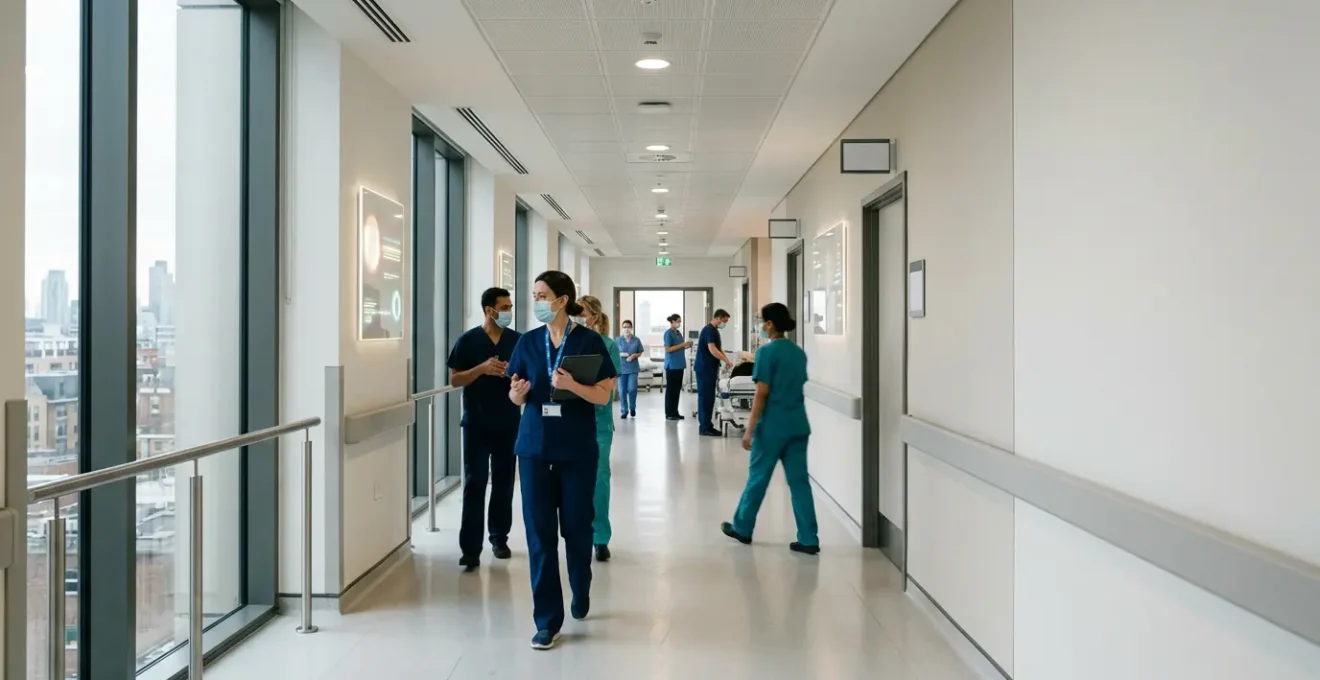
The frustratingly long waits in London’s A&E departments aren’t just due to a lack of staff or beds; they’re a symptom of outdated, disconnected IT systems creating operational bottlenecks. The solution isn’t futuristic AI, but the practical application of existing technology to improve patient flow. By using tools like remote monitoring, unified data records, and Urgent Treatment Centres, we are actively diverting patients from A&E and ensuring those who do attend are processed with maximum efficiency.
The feeling is familiar to almost every Londoner: the stark, bright light of an A&E waiting room, the slow crawl of the clock, and the uncertainty of when you’ll be seen. The immediate assumption is that the system is simply overwhelmed. While capacity is a factor, the real bottleneck, the hidden drag on our efficiency, is often invisible to the patient. It lies in the digital architecture—or lack thereof—that underpins every action taken within our hospitals.
Many discussions about healthcare technology focus on futuristic promises of AI diagnostics or robotic surgeons. While these are important, they don’t address the immediate problem of patient flow. The frustration you feel in the waiting room is often the end result of a cascade of small data failures: a GP record that couldn’t be accessed, a test result that had to be manually chased, or a specialist’s notes trapped in another hospital’s incompatible system.
But what if the key to shorter waits wasn’t about adding more, but connecting better? This is the operational shift currently underway. The strategy is twofold: first, to use smart, accessible technology to guide patients to the right care setting, often avoiding A&E entirely. Second, for those who must come to the hospital, we are leveraging integrated data and automation to streamline their journey from triage to discharge. This is not science fiction; it is a pragmatic re-engineering of our processes, using tools that are already at our disposal to make your next necessary visit to a London hospital faster and safer.
This guide will walk you through the core problems we are tackling and the specific technologies being deployed across London’s NHS trusts to improve patient flow and, ultimately, reduce the time you spend waiting.
Summary: How Technology Is Reshaping London’s Emergency Care
- Why legacy IT systems are still causing 40% of NHS delays?
- How to use NHS remote monitoring tools to stay out of hospital?
- Robotic surgery vs human hands: which is safer for prostate removal?
- The digital record mistake that could cancel your operation
- When will virtual wards be available in every UK trust?
- Why different NHS trusts use incompatible computer systems?
- How to find an urgent treatment centre open right now?
- How to reduce your waiting time at A&E without jumping the queue?
Why legacy IT systems are still causing 40% of NHS delays?
From an operational standpoint, legacy IT is the single greatest brake on hospital efficiency. These are not just old computers; they are outdated, isolated systems that cannot communicate with each other. A clinician in A&E might be unable to see a patient’s GP history, allergy information, or recent scans from another trust, forcing them to repeat tests and take manual histories. This redundancy isn’t just slow; it introduces significant clinical risk. Every minute spent searching for information is a minute not spent on treatment.
The scale of the problem is vast. A British Medical Association survey revealed the frustration among clinicians, with 74% stating they have to work with too many different IT systems and 63% reporting their hardware and software are outdated. This isn’t a minor inconvenience; it’s a fundamental barrier to seamless patient flow. This fragmentation is a direct result of decades of individual trusts procuring their own systems without a unified national strategy.
The history of trying to fix this is fraught with challenges. The most notable attempt, the National Programme for IT (NPfIT), serves as a cautionary tale. Launched in 2002 with ambitious goals to create a unified electronic record system, it was dismantled in 2011. After an expenditure of over £10 billion, it delivered only a fraction of the expected benefits. The failure was rooted in a top-down approach that ignored the cultural and operational realities of individual trusts and failed to plan for interoperability from day one. This experience has made the NHS cautious, leading to the patchwork of systems we are still working to connect today.
How to use NHS remote monitoring tools to stay out of hospital?
A core part of our strategy to reduce A&E pressure is to manage health conditions proactively, keeping patients safely at home rather than in a hospital bed. This is where remote monitoring and “virtual wards” come into play. A virtual ward is not a place, but a system. It allows patients who would otherwise need to be in hospital to be monitored and cared for in their own homes, using technology to track their vital signs like oxygen levels, blood pressure, and temperature.
This approach is being rapidly scaled across London. In North Central London, which covers areas like Barnet, Camden, and Islington, there are already over 200 virtual ward beds. These are supporting patients with a range of conditions, from frailty related to age to complex heart conditions. The “North Mid Hospital@Home” service, for example, celebrated its first birthday in May 2024 after successfully managing its 600th patient at home, demonstrating the viability and patient acceptance of this model of care.
For the patient, accessing these pathways often begins with a digital front door like NHS 111 online. By using this service first, you can be directed to the most appropriate care, which might be a virtual ward referral from your GP or a community team, bypassing A&E completely. The process is straightforward and designed to assess your needs quickly.
- Step 1: Access the service by opening the NHS App on your smartphone or visiting 111.nhs.uk on a web browser.
- Step 2: Enter your basic details (age, sex, postcode) and select your primary symptom.
- Step 3: Answer a dynamic set of questions generated by the NHS Pathways algorithm, which triages your condition based on clinical risk.
- Step 4: Receive a clear recommendation, which could be self-care advice, a referral to a pharmacist or GP, or direction to an Urgent Treatment Centre or A&E.
- Step 5: If a virtual ward is appropriate, this initial assessment can be shared with your GP or a community health team to initiate your onboarding.
Robotic surgery vs human hands: which is safer for prostate removal?
While much of our focus is on keeping patients out of hospital, technology is also transforming efficiency and safety for those who require admission, particularly for surgery. The debate between robotic-assisted surgery and traditional methods is often framed around safety, but from an operational perspective, its real power lies in improving recovery, which in turn frees up vital hospital beds. For procedures like a radical prostatectomy (prostate removal), robotic systems like the Da Vinci allow for smaller incisions, greater precision, and less blood loss.
This translates directly into shorter hospital stays. NHS England data shows that some bladder cancer patients who undergo robotic surgery are able to leave the hospital in just five days—half the time expected for open surgery. This is a monumental gain in patient flow. Every bed freed up faster means another patient can be admitted from A&E or a waiting list, directly reducing system-wide delays. The precision of robotics also often leads to better long-term outcomes, such as reduced risk of incontinence or erectile dysfunction in prostate cancer patients.
But the role of robotics extends far beyond the operating theatre. As Lisa Farrell of the National Robotarium notes in a Digital Health article on NHS robotics:
From automated guided vehicles (AGVs) handling hospital logistics to robotic assistants supporting surgery, these technologies could transform both patient outcomes and staff experiences.
– Lisa Farrell, National Robotarium, Digital Health article on NHS robotics
This vision is already a reality. AGVs are being deployed to transport meals, laundry, and medical supplies, freeing up porters and nurses to focus on patient-facing care. This automation of routine tasks is another critical layer in improving hospital-wide efficiency.
The image above shows an automated guided vehicle, a key part of the behind-the-scenes logistics that keep a modern hospital running smoothly. By automating these transport tasks, we create a more predictable and efficient environment, which ultimately supports better patient flow from admission to discharge.
The digital record mistake that could cancel your operation
The promise of digital records is a single, unified view of a patient’s health history, accessible wherever they are treated. The reality can be dangerously different. When systems fail or data is incomplete, the consequences can range from a delayed appointment to a cancelled operation or a serious patient safety incident. A missing allergy notification or an outdated medication list in a patient’s digital file is a critical operational risk.
Initiatives like the London Care Record are making huge strides in solving this. By creating a unified “viewer” that sits on top of different trust systems, we are enabling clinicians to see a more complete picture. The scale is immense; the OneLondon initiative reports over 90 million uses of the record by health and care staff, with over 100,000 staff members viewing it 2.5 million times a month. This is fundamentally changing how care is delivered across the capital, reducing repeated tests and improving the safety of decision-making in A&E.
However, the fragility of these systems was starkly illustrated by an incident at Basildon and Thurrock University Hospitals NHS Foundation Trust (BHRUHT). A failure in their digital system meant that up to 25,000 patient documents, including discharge summaries and test results, had not been sent to GPs. The clinical risk was enormous. GPs estimated it would take them 8,000 hours of work—or 20 minutes per document—to review the backlog and update patient records. An event like this can undermine years of progress and highlights the critical importance of not just having digital records, but ensuring their reliability and the integrity of the data flow between care settings.
When will virtual wards be available in every UK trust?
The NHS has set an ambitious goal: to have virtual ward capacity in every trust, creating a national network of home-based care. The aim is to deliver between 40 and 50 virtual “beds” per 100,000 people, which would create over 10,000 virtual ward places nationwide. This isn’t a distant future; it’s an active rollout designed to build hospital capacity and resilience, especially ahead of winter pressures.
The driving force behind this expansion is clear evidence of its effectiveness. It’s not just about patient comfort; it’s about tangible system savings and improved flow. As NHS England’s operational framework for virtual wards states, these models “reduce hospital admissions and readmissions with knock-on impacts for emergency department presentations.” By providing timely, consultant-led care at home, we prevent conditions from escalating to the point where an A&E visit becomes necessary.
The image above captures the essence of a virtual ward: a healthcare professional provides expert care, supported by technology, in the comfort of a patient’s home. This blend of human touch and digital oversight is the foundation of the model’s success. This human-centric approach is crucial; technology is the enabler, but the care is delivered by our dedicated community nurses and multidisciplinary teams.
The financial and operational impact is compelling. A review of the North West London Virtual Hospital provides hard numbers. From April 2022 to April 2023, the service managed 4,311 patients at home. This is estimated to have saved 8,622 bed days, resulting in a system saving of approximately £3.4 million. This is a powerful demonstration of how shifting care from the hospital to the home directly translates into increased capacity and reduced pressure on emergency services.
Why different NHS trusts use incompatible computer systems?
The reason your data might not follow you from one London hospital to another lies in the history of the NHS itself. For decades, NHS trusts have operated as semi-independent organisations, each with the autonomy to procure its own IT systems. This led to a “best-of-breed” approach where a trust might buy an excellent system for radiology from one vendor and a leading system for patient administration from another. The problem is that these systems were never designed to talk to each other, creating digital silos.
This lack of interoperability is the single biggest technical challenge we face. As Mark Chester, a senior digital leader at the University Hospitals of Derby and Burton NHS Foundation Trust, explains:
Maintaining legacy systems within the NHS not only poses significant cyber security challenges it is also an expensive way to maintain historical data, as quite often maintenance costs on legacy systems is very high.
– Mark Chester, Assistant Director of Digital Services, University Hospitals of Derby and Burton NHS Foundation Trust
Instead of attempting a costly and high-risk “rip and replace” strategy for these core systems—a lesson learned from the NPfIT failure—the modern approach is to build an intelligent layer on top. This is the strategy behind the OneLondon programme. It doesn’t try to force 40 NHS trusts and 1,400 healthcare providers to use the same software. Instead, it has built a unified data ‘viewer’. This clever solution securely pulls information from all the different underlying systems and presents it to a clinician in a single, coherent view. It’s a pragmatic solution to a deeply entrenched problem, focusing on making data accessible rather than rebuilding the entire foundation.
How to find an urgent treatment centre open right now?
One of the most effective ways for a patient to reduce their own waiting time is to avoid A&E altogether for non-life-threatening conditions. Urgent Treatment Centres (UTCs) are specifically designed for this purpose. They can treat a wide range of issues, including sprains, minor burns, and suspected broken bones, often much faster than a major A&E. The key challenge for patients has been knowing which one to go to, whether it’s open, and what its current waiting time is.
Technology is now solving this information gap. The first step should always be NHS 111 online. It acts as a digital triage service, helping you determine if a UTC is the right place for your needs. With around 550,000 completed triages per month, it has become the primary digital front door to urgent care. This service helps distinguish between a true emergency requiring a 999 call and an urgent issue perfectly suited for a UTC.
Once you’ve been advised to visit a UTC, a new generation of tools can help you make the smartest choice. Here is a practical guide to finding the best option in real-time:
- Step 1: Start with Digital Triage. Always use NHS 111 online or the NHS App first to check your symptoms and confirm a UTC is the appropriate level of care.
- Step 2: Use Live Waiting Time Apps. Several third-party websites and apps now pull live data from over 80 NHS hospitals, with waiting times updated as frequently as every 1-5 minutes.
- Step 3: Compare Wait vs. Travel. Use these tools to compare the current A&E and UTC waiting times against the travel time from your location. A further away UTC with a 30-minute wait is better than a closer A&E with a 4-hour wait.
- Step 4: Check Capabilities. Before you travel, verify that the specific UTC has the necessary facilities for your issue, such as an X-ray machine for a suspected fracture. This information is often available on the NHS website or the UTC’s own page.
Key takeaways
- Outdated and disconnected IT systems are a primary cause of A&E delays, creating operational bottlenecks.
- Proactive care through virtual wards and remote monitoring is proven to reduce hospital admissions and save millions.
- The solution to incompatible systems is not replacement but integration, using unified data ‘viewers’ like the London Care Record.
How to reduce your waiting time at A&E without jumping the queue?
The stark reality of A&E pressure is reflected in performance data. As the Nuffield Trust reports, in the third quarter of 2025/26, only 60% of patients attending major A&E departments were seen, treated, and discharged or admitted within the four-hour target. While the system works tirelessly to improve this, you as a patient can adopt a strategy to ensure your journey is as smooth as possible. This isn’t about jumping the queue—triage will always prioritise the most critically ill—but about being a “smart user” of the service by being digitally prepared.
Effective preparation helps us to help you faster. When you arrive with all necessary information organised and accessible, you reduce the cognitive load on our triage nurses and clinicians, allowing them to assess you more quickly and accurately. This removes small, cumulative delays that can add up significantly over the course of your visit. Think of it as preparing your own “data packet” to ensure a seamless handover to the clinical team.
Your action plan: The A&E digital preparation checklist
- Points of contact: Before you leave, use NHS 111 online or the NHS App as your first point of contact to confirm A&E is the correct destination and rule out UTC alternatives.
- Collect information: Inventory your key data. Have a clear photo of your GP medication list on your phone and have your NHS number and a brief timeline of your symptoms ready in a notes app.
- Ensure coherence: When you arrive for triage (digital or in-person), provide complete and accurate information. Ensure what you say matches the data you’ve prepared to give a consistent clinical picture.
- Provide unique data: If you use wearable devices (like an Apple Watch for ECG) or health tracking apps, bring any relevant data. This unique information can provide valuable context that standard tests might not.
- Integrate your arrival: Check if your local trust’s website or app offers a digital check-in or pre-registration feature. Using this while en route can integrate you into the hospital’s system before you even walk through the door.
Ultimately, navigating London’s urgent care system efficiently is a partnership. By using the digital tools available to make informed decisions and arriving prepared, you can significantly improve your experience and allow us to focus our resources where they are most needed.