As a new parent, it’s natural to feel concerned about your baby’s vulnerability to diseases before they can be vaccinated. The simple answer is yes, herd immunity offers them significant protection, but it’s not a magic forcefield. This article explains that community protection is a layered, statistical defense system. We’ll explore precisely how it works, why its strength varies, and how your decision to vaccinate acts as a critical piece of this collective shield for the most vulnerable among us.
Bringing a new baby home is a time of incredible joy, but it also comes with a host of new worries. You meticulously create a safe environment, but what about the invisible threats—the viruses and bacteria circulating in the world? For a baby too young to receive their first vaccinations, this concern is especially acute. You may have heard the term “herd immunity” mentioned as a protective shield, a sort of communal fortress that keeps diseases at bay. It’s a comforting thought, but as a parent, you need more than comfort; you need clarity.
Many discussions on this topic are simplistic. They often present herd immunity as a simple switch: either a community has it, or it doesn’t. They might mention that it helps protect those who can’t be vaccinated, but they rarely explain the intricate mechanisms at play. What does it actually mean when we say your vaccination protects someone else’s child? And if it’s so effective, why do we still see outbreaks of diseases like measles?
The key is to move beyond the idea of a perfect, impenetrable wall. The reality is that herd immunity is a powerful, yet nuanced, statistical firewall. Its effectiveness depends on the specific disease, the consistency of vaccination rates, and the very fabric of a community. Understanding this layered defense system isn’t just for public health experts; it’s empowering for parents. It transforms the act of vaccination from a personal health choice into a profound act of community protection.
This guide will walk you through the science of community immunity from a pediatrician’s perspective. We will break down why different diseases require different levels of protection, how a vaccinated individual directly reduces risk for others, and why even high national vaccination rates can hide dangerous vulnerabilities, ultimately showing how your choice is a vital contribution to protecting every child, including your own.
Summary: A Parent’s Guide to Herd Immunity
- Why the Herd Immunity Threshold for Measles Is 95% But Only 80% for Polio?
- How Does Your Vaccinated Partner Protect Your Immunocompromised Child?
- Natural Immunity vs Vaccine Immunity: Which Provides Better Herd Protection?
- The Isolation Mistake That Traumatizes Immunocompromised Children
- When Can Immunocompromised People Safely Attend School or Work?
- Why Your Unvaccinated Child Puts Leukaemia Patients at Risk?
- Why Some London Postcodes Have 70% Vaccination While Others Have 50%?
- Why Even 95% Vaccination Leaves Vulnerable Communities at Risk
Why the Herd Immunity Threshold for Measles Is 95% But Only 80% for Polio?
Not all viruses are created equal, and the level of vaccination needed to protect a community reflects this. The key factor is a pathogen’s basic reproduction number, or R0 (pronounced “R-naught”). This number tells us, on average, how many people one sick person will infect in a population with no immunity. The higher the R0, the more contagious the disease, and the more robust our collective “firewall” needs to be.
Measles is one of the most contagious human viruses known. With an R0 between 12 and 18, a single case can rapidly ignite a widespread outbreak. To stop it, we need to remove as much “fuel” as possible. A systematic review confirms that a measles R0 of 12-18 requires 95% vaccination coverage to break the chains of transmission effectively. At this level, the virus simply can’t find enough susceptible hosts to sustain itself and eventually dies out, protecting newborns and others who cannot be vaccinated.
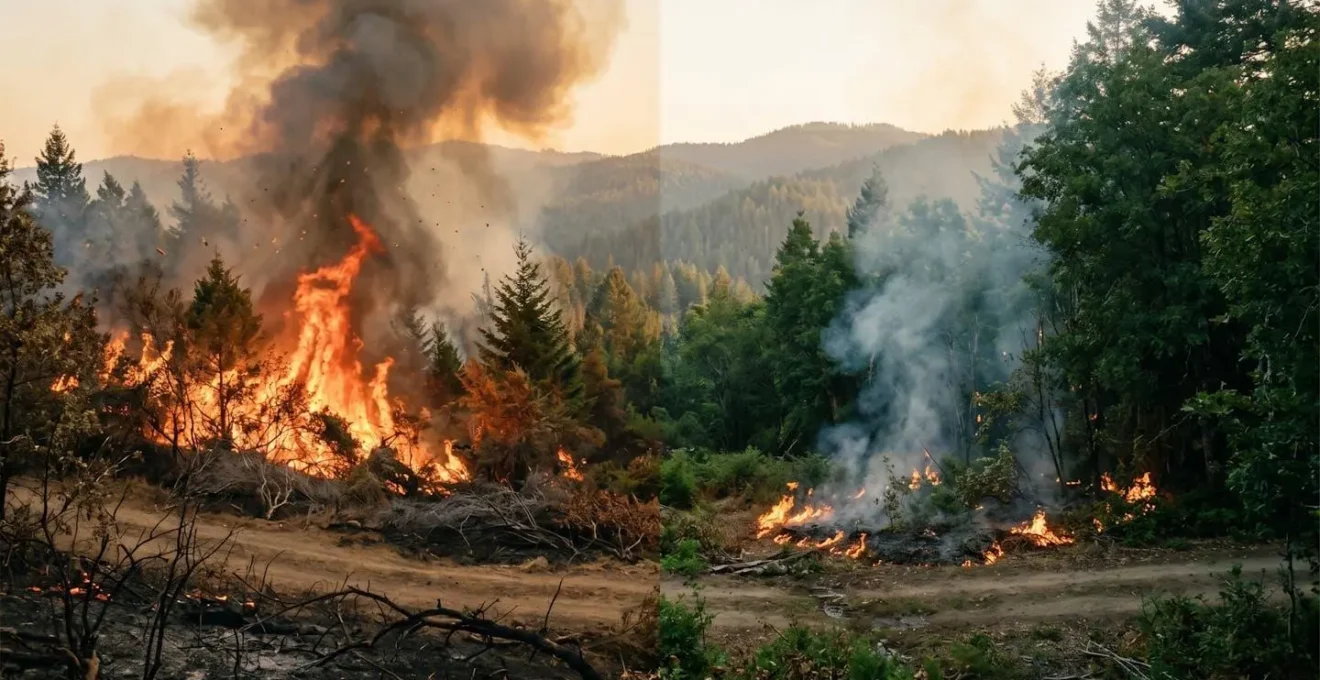
In contrast, poliovirus is less contagious. Researchers have determined that the R0 for polio is between 5 and 7. Because it spreads less easily, the herd immunity threshold is lower, around 80%. As the image above illustrates, stopping a fast-moving wildfire (measles) requires a much wider and more complete firebreak than managing a slower, controlled burn (polio). This is why achieving and maintaining a very high vaccination rate for measles is a constant public health priority.
How Does Your Vaccinated Partner Protect Your Immunocompromised Child?
The protection of herd immunity feels abstract, but it becomes very personal at home. Imagine you have a child who is immunocompromised—perhaps due to cancer treatment—and cannot be vaccinated. How does your partner’s vaccination status directly protect them? The answer lies in a powerful, often overlooked benefit of vaccines: viral load reduction.
While we know vaccines are excellent at preventing illness, they aren’t always 100% effective at preventing infection entirely. In what’s known as a “breakthrough infection,” a vaccinated person can still contract a virus. However, their immune system, already trained by the vaccine, mounts a rapid and powerful response. This significantly reduces the amount of virus that replicates in their body. A lower viral load means they shed far fewer viral particles, making them substantially less contagious to others.
This isn’t just theory. A landmark study in Nature Medicine found that viral load was substantially reduced in vaccinated individuals who had breakthrough COVID-19 infections. This “cocooning” effect is a critical layer of defense. By getting vaccinated, your partner (and you) become poor transmitters of the disease. You effectively build a protective barrier around your vulnerable child, drastically lowering the chance that the virus ever reaches them. As the study’s authors note:
Beyond their substantial protection of individual vaccinees, coronavirus disease 2019 (COVID-19) vaccines might reduce viral load in breakthrough infection and thereby further suppress onward transmission.
– Levine-Tiefenbrun et al., Nature Medicine
Natural Immunity vs Vaccine Immunity: Which Provides Better Herd Protection?
A common question is whether immunity gained from a natural infection is better than immunity from a vaccine, and which contributes more to herd protection. While it’s true that surviving an illness like measles typically provides robust, lifelong immunity, relying on this path to protect the community is both dangerous and far less effective than a coordinated vaccination program.
The first and most obvious reason is the cost. Natural infection comes with the full risk of the disease’s complications, which for measles can include pneumonia, brain swelling, and death. Vaccination, on the other hand, generates immunity without causing the illness. For a community, choosing vaccination is choosing a path to protection that avoids widespread suffering and tragedy. It is the core ethical responsibility of public health.
Secondly, vaccine-induced immunity is far more predictable and standardized. When a population is vaccinated, public health officials have a clear and reliable measure of who is protected and can identify coverage gaps. Immunity from natural infection, however, is chaotic and uneven. It leaves unpredictable pockets of susceptible individuals, making the community’s “statistical firewall” unreliable. Furthermore, the level of immunity from natural infection can be variable from person to person, whereas vaccines are designed to elicit a consistent and effective immune response across the vast majority of recipients. For the goal of stable, resilient herd immunity, the standardized protection offered by vaccines is vastly superior.
The Isolation Mistake That Traumatizes Immunocompromised Children
When a child is immunocompromised, a parent’s first instinct is to build a fortress, isolating them from every potential threat. While well-intentioned, this approach of total social withdrawal can be a mistake. It can lead to profound loneliness, anxiety, and developmental delays, trading one form of harm for another. The goal should not be absolute isolation, but rather smart and empowered risk management. It’s about carefully managing exposure, not eliminating it entirely.
Instead of seeing the world as a threat to be avoided, we can teach children skills to navigate it more safely. This involves focusing on environments and activities with lower transmission risk and building a community of support that understands and respects the child’s needs. This proactive approach fosters resilience and a sense of control rather than fear and helplessness. It acknowledges that a child’s mental and social well-being is just as important as their physical health. The key is to replace the fear of isolation with a plan for “smart seclusion.”
Your Action Plan: The Smart Seclusion Toolkit
- Prioritize outdoor activities where viral transmission is significantly lower than in indoor settings.
- Form ‘vaccination-verified’ playgroups with families who maintain up-to-date immunization schedules, creating a trusted social bubble.
- Communicate with schools to ensure enhanced hygiene protocols and ventilation systems are in place.
- Avoid peak-illness seasons for indoor gatherings and crowded venues whenever possible.
- Teach effective handwashing and personal space awareness as empowerment skills, not fear-based rituals.
When Can Immunocompromised People Safely Attend School or Work?
There is no single moment or magic number that makes it “safe” for an immunocompromised person to re-enter shared spaces like school or work. Safety is not an absolute state but a result of multiple, overlapping layers of protection. Public health experts often use the “Swiss Cheese Model” to explain this concept. Imagine a stack of Swiss cheese slices; each slice is a layer of protection (like vaccination, masks, ventilation, or hand hygiene), and each has holes or imperfections. No single slice is a perfect barrier.
However, when you stack the slices, the holes rarely align. A virus that gets through a gap in one layer is likely to be stopped by the next. This is the essence of layered defense. The decision for an immunocompromised person to attend school or work depends on how many protective layers are in place, both for them personally and in their community. The stronger the community’s vaccination rate (a very thick slice of cheese with few holes), the less pressure is placed on the other, more individual layers.

So, when is it safe? It’s safer when community vaccination rates are high, when the specific workplace or school has good ventilation, when hygiene practices are strong, and when the individual can use personal measures like masking if needed. It’s a risk calculation, not a simple yes or no. This model helps answer the question, “what’s the point of a vaccine if it’s not 100%?” The vaccine is one of the most effective layers we have, making all the other layers even more powerful.
Why Your Unvaccinated Child Puts Leukaemia Patients at Risk?
The decision to vaccinate doesn’t just affect your own child; it has a direct impact on the most vulnerable people in your community. Among the most fragile are patients undergoing chemotherapy for cancers like leukaemia. Their treatment decimates their immune system, leaving them completely defenseless against infections that a healthy person would easily fight off. For them, a vaccine-preventable disease like measles isn’t just a rash and fever; it can be a life-threatening event.
These individuals often cannot be vaccinated themselves because their immune systems are too weak to generate a response. They are entirely dependent on the “statistical firewall” of herd immunity to keep viruses away. As the U.S. Department of Health & Human Services explains, community immunity is especially critical for people who cannot get vaccinated, including those with cancer. When an unvaccinated child contracts a preventable disease, they become a potential vector, capable of carrying that spark of infection into a hospital or clinic and unknowingly passing it to a patient whose body has no ability to defend itself.
This is why public health officials are so adamant about high vaccination rates. It’s about creating a compassionate shield around those who have lost their own. The Oxford Vaccine Knowledge Project puts it simply and powerfully:
Herd immunity gives protection to vulnerable people such as newborn babies, elderly people and those who are too sick to be vaccinated.
– Oxford Vaccine Knowledge Project, Herd Immunity (Herd Protection)
Why Some London Postcodes Have 70% Vaccination While Others Have 50%?
Looking at a national vaccination average can be dangerously reassuring. A country might boast a high overall rate, but this single number often masks a patchwork of hyperlocal realities. The example of London, where vaccination coverage for childhood immunizations can vary dramatically from one postcode to the next, illustrates this “geographic porosity” perfectly. These disparities aren’t random; they are driven by a complex mix of logistical, ideological, and systemic barriers.
Understanding these barriers is the first step toward fixing them. They are not all rooted in “anti-vax” sentiment. For many families, the obstacles are practical. A single parent working two jobs may not be able to take time off for a clinic appointment. A recently immigrated family might face language barriers or be unfamiliar with the healthcare system. For others, a deep-seated mistrust in the medical system, often stemming from historical inequities, can be a powerful deterrent. And yes, in some communities, organized vaccine misinformation creates clusters of ideological opposition. The result is the same: pockets of low coverage where diseases can gain a foothold and spread.
A comparative analysis of these factors highlights that the solutions must be as diverse as the problems. Mobile clinics and extended hours can solve logistical issues, while community engagement with trusted local leaders is needed to overcome ideological and systemic barriers.
| Barrier Type | Examples | Impact on Coverage | Required Solution |
|---|---|---|---|
| Logistical Barriers | Lack of stable primary care, language barriers, work schedule conflicts, transportation issues | Creates vulnerable pockets even without vaccine opposition | Improved access, mobile clinics, extended hours, multilingual outreach |
| Ideological Barriers | Active anti-vaccine sentiment, philosophical objections, religious concerns | Creates deliberate clustering of unvaccinated individuals | Community engagement, trusted messengers, addressing specific concerns |
| Systemic Inequality | Mistrust from historical medical exploitation, poverty, inadequate healthcare infrastructure | Reduces vaccination rates without active hesitancy | Building trust, addressing root causes, culturally competent care |
Key Takeaways
- Herd immunity is not a single number; the required vaccination threshold depends on how contagious a specific disease is (its R0).
- Vaccinated individuals protect others by significantly reducing their viral load if they get a breakthrough infection, making them far less contagious.
- Safety for the immunocompromised comes from multiple, layered defenses (the “Swiss Cheese Model”), with community vaccination being the most critical layer.
Why Even 95% Vaccination Leaves Vulnerable Communities at Risk
Perhaps the most critical and misunderstood aspect of herd immunity is the danger of relying on averages. A national or state-level vaccination rate of 95% sounds incredibly successful, and it is. However, that high average can conceal a dangerous reality: deep pockets of undervaccination where diseases can, and do, take hold. These clusters of susceptibility are where outbreaks begin, putting newborns and immunocompromised individuals at extreme risk, regardless of the national statistic.
A powerful public health analogy perfectly captures this problem, highlighting that a 95% national average is like saying the average depth of a river is 3 feet—you can still drown in the 10-foot-deep pockets. These “deep pockets” are communities, counties, or even single schools where vaccination rates fall far below the safe threshold.
A 95% national average is like saying the average depth of a river is 3 feet. You can still drown in the 10-foot-deep pockets.
– Public Health Analogy, Understanding Vaccination Thresholds for Herd Immunity
This isn’t a hypothetical problem. Data from New York State shows that despite an impressive statewide kindergarten polio vaccination rate of 97.9%, a staggering 46% of counties were below the herd immunity threshold for 2-year-olds. An outbreak in one of these vulnerable counties can easily spread, threatening babies across the state who are too young for their polio shots. This is the central paradox: we can have near-perfect overall coverage and still be profoundly at risk because a virus doesn’t care about the average; it only needs one vulnerable community to ignite.
Your choice to vaccinate is the single most powerful tool you have to protect not only your own child but every vulnerable member of your community. It helps fill in those dangerous “10-foot-deep pockets,” strengthening our shared shield and ensuring that everyone, especially newborns, can be safe. By participating in your community’s vaccination program, you are making an informed, compassionate, and scientifically-backed decision to uphold this collective responsibility.